Ultimate Balkans Travel Itinerary 2 Weeks Guide
In 2026, a mid-range daily budget of €60–80 covers a private guesthouse room, two sit-down meals, and entrance fees across Croatia, Montenegro, Bosnia, and Albania — Albania and Bosnia come in at the lower end, while coastal Croatia can push closer to €90 on busy summer days.
Bus travel between Balkan countries in 2026 costs €15–30 per leg: expect around €15 for Dubrovnik–Kotor, €20 for Kotor–Mostar, and €25–30 for Sarajevo–Tirana, with journey times of 3–6 hours depending on border crossing wait times.
The Balkan Peninsula offers a rich blend of history, culture, and stunning landscapes. Planning a journey through this region requires careful timing and a solid route. This Balkans travel itinerary 2 weeks guide helps you navigate the best stops from the Adriatic to inland cities.
Many travelers feel overwhelmed by the complex transport systems and border crossings in Southeast Europe. You can experience ancient walled towns and vibrant modern capitals in a single fortnight. This guide provides practical tips on where to go and how to stay on budget.
Expect to find warm hospitality and diverse cuisines across every border you cross. Each country in the region has a unique character that deserves your full attention. Starting your trip with a clear plan ensures you see the most iconic landmarks without rushing.
Starting the Coastal Journey in Croatia
Dubrovnik serves as a perfect gateway for exploring the southern coast. Walking the ancient stone walls takes about two hours and costs roughly 35 EUR in 2026. Afternoon crowds can be heavy, so arrive early — gates open at 8 AM — to enjoy the views in peace and avoid the mid-morning cruise ship surge.
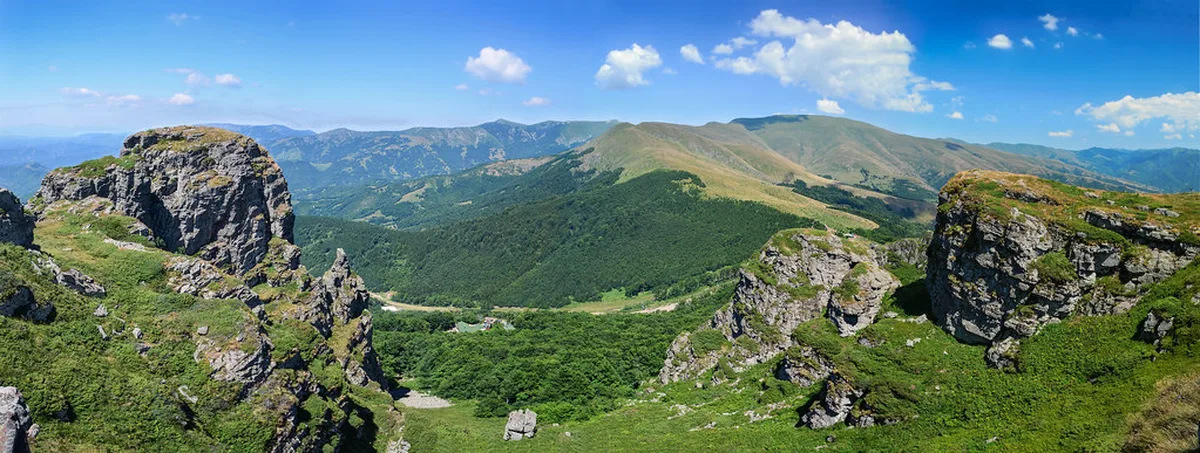
The Old Town features narrow limestone streets filled with shops and small cafes. Visit the Rector's Palace (entry around 15 EUR) to learn about the maritime history of this former republic. Cable car rides to Mount Srd provide a panoramic view of the sparkling Adriatic and cost approximately 20 EUR return.
Spending three nights here allows for a relaxed pace before moving south. The Adriatic coast travel guide covers island-hopping options in detail, including Hvar and Brač for those with extra time. Boats to Lokrum Island depart every 30 minutes from the old harbor for around 15 EUR return.
Evening meals in the city often feature fresh seafood and local olive oils. Look for family-run konobas tucked away in the side streets for better value — a two-course dinner with wine runs 25–35 EUR per person. Reservations are highly recommended during the peak summer months of July and August, when the city's population swells fivefold. Budget accommodation in Dubrovnik is limited: hostel dorms start at €35/night, while private rooms in a guesthouse or small hotel average €70–90/night. Booking 6–8 weeks ahead for July visits is essential. For those on tighter budgets, the suburb of Lapad offers guesthouses from €50/night with bus access to the Old Town in 15 minutes.
Day trips to the Elaphiti Islands (ferry from €15) are worth a half-day if you prefer a quieter pace. Border crossings into Montenegro via the coastal road take 20–40 minutes in off-peak seasons and up to 2 hours in July and August. Keep your passport ready and pack snacks — the border queue can be slow.
Exploring the Mountains of Montenegro
Crossing the border into Montenegro reveals a dramatic landscape where mountains meet the sea. Kotor sits at the end of a deep bay and offers incredible hiking opportunities. Climbing the 1,350 steps to the San Giovanni Fortress requires sturdy shoes and plenty of water — the ascent takes 45–60 minutes and rewards you with sweeping views over the entire Bay of Kotor. Entry to the fortress walls costs 8 EUR in 2026.
The town of Perast is just a 25-minute bus ride from Kotor bus station, costing around 2 EUR. Take a small boat to Our Lady of the Rocks island for approximately 5 EUR return — the boat taxi runs on demand from the Perast waterfront. This man-made island houses a beautiful Baroque church and a fascinating museum with 16th-century votive paintings.
Montenegro uses the Euro, which makes transactions simple for many international visitors. Prices for accommodation and dining are generally lower than in neighboring Croatia. Budget travelers can find dorm beds in Kotor for €20–28/night at well-rated hostels like Old Town Hostel and Hostel Cattaro, while private en-suite rooms in family-run guesthouses run €45–65/night. Mid-range hotels with sea views average €80–110/night in 2026.
Spend at least two nights in this area to fully appreciate the scenery. Early morning walks through the Kotor Old Town — before 9 AM — help you avoid the cruise ship groups that dock daily throughout summer. The local markets offer fresh pomegranate juice (2 EUR) and mountain honey (8–12 EUR/jar) that make great snacks and gifts. Restaurant meals in Kotor average €12–18 for a main course with a local Vranac wine; Montenegro's seafood is exceptional and typically fresher than what you'll find inland. Budget €40–55/day excluding accommodation for food, activities, and transport within Montenegro.
The bus from Kotor to Mostar departs once daily at around 7 AM (check schedules at the Kotor bus station), costs approximately €20, and takes 4–5 hours including a border crossing into Bosnia. The border at Kamensko/Šćepan Polje is generally smooth — expect 15–30 minutes — but carry snacks and water for the journey.
Discovering the History of Bosnia
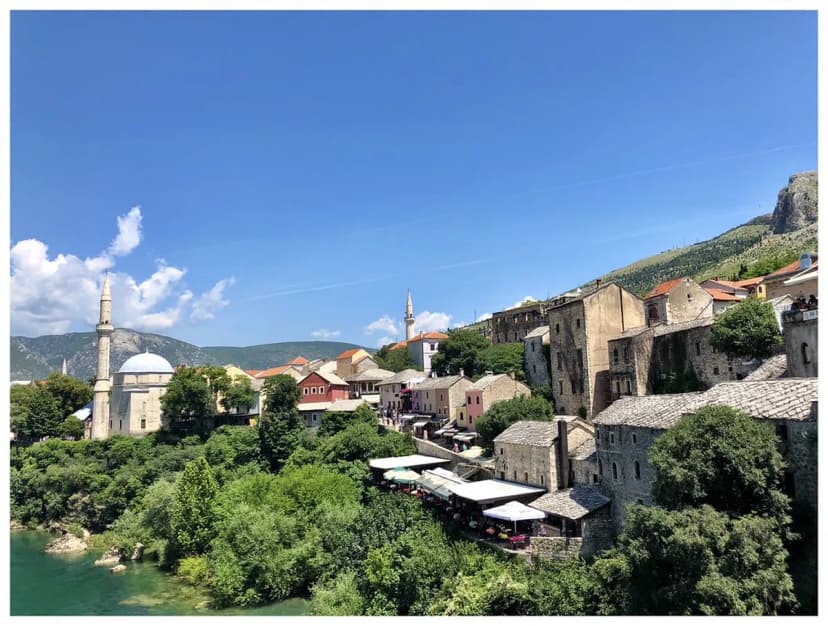
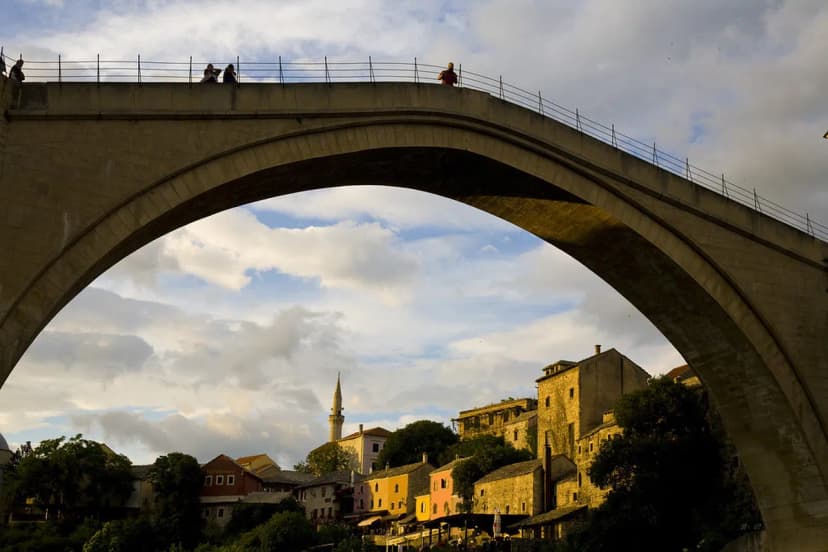
Heading inland brings you to the historic cities of Mostar and Sarajevo. Mostar is famous for its iconic Stari Most bridge, where trained local divers leap into the emerald Neretva River — you can watch from the banks for free or pay around 10 BAM (Bosnian Marks, approximately €5) to join a guided bridge walk. The surrounding Kujundžiluk bazaar is a great place to buy traditional copper goods, hand-painted ceramics, and embroidered textiles at prices far below those in Croatia.
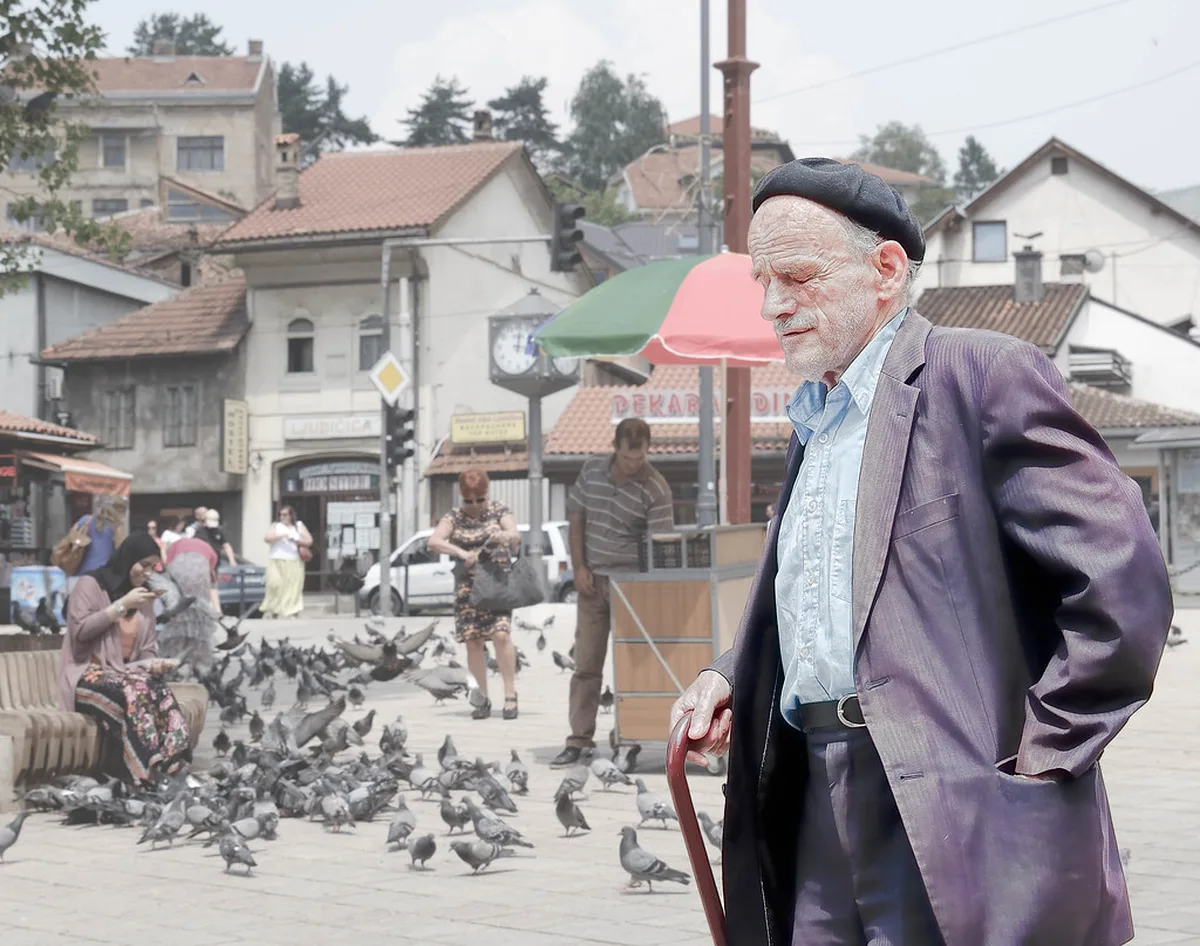
Mostar accommodation is affordable: dorm beds run 25–35 BAM (€13–18/night), and private rooms in family guesthouses average 60–90 BAM (€30–46/night). Many family pensions include a home-cooked breakfast. Spending 2 nights in Mostar allows a full day at the Old Town and a half-day trip to Blagaj (a 16th-century Dervish monastery at the source of the Buna River, entry 5 BAM).
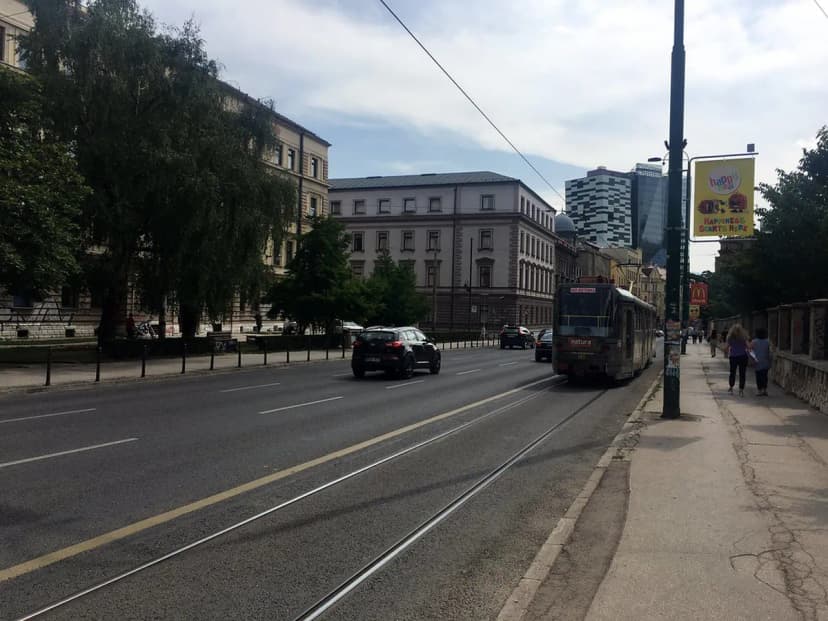
Sarajevo offers a unique blend of Ottoman and Austro-Hungarian architecture. Key sites include the Tunnel of Hope (entry 10 BAM), the Gazi Husrev-beg Mosque (free), and the Latin Bridge where Archduke Franz Ferdinand was assassinated in 1914. The city is known for its resilient spirit and deep historical significance, and guided war history tours (around 30 BAM per person) provide powerful context for the 1992–1995 siege.
Try the local Bosnian coffee (bosanska kafa), which is served in beautiful copper džezva sets and accompanied by a lokum sweet — the ritual matters here, so take your time. Pair your drink with a plate of ćevapi (minced meat sausages in a soft somun roll) for a truly authentic lunch at around 8–12 BAM (€4–6). Most sit-down meals in Bosnia are very affordable: a full dinner with beer costs 20–30 BAM (€10–15) per person in local restaurants.
Public transport between Mostar and Sarajevo is reliable: buses depart every 1–2 hours from Mostar bus station, cost 19–22 BAM (around €10), and take approximately 2.5 hours along a scenic mountain highway. Trains are limited (one daily train runs this route in about 2.5 hours), so most travelers rely on the extensive bus network. Buy your tickets at the station a day in advance to secure a seat, especially on Friday afternoons and Sunday evenings when locals fill the buses. Sarajevo hostels offer dorms from €12–15/night and private rooms from €28–45/night — good budget picks include Hi Hostel and Franz Ferdinand Hostel.
The bus from Sarajevo to Tirana (Albania) runs once daily with operators like Arriva or FlixBus affiliates, costs approximately €25–30, and takes 7–9 hours including the Bosnia–Montenegro–Albania border crossings. An alternative is to break the journey with a night in Podgorica (Montenegro's capital), which cuts each leg to around 4 hours.
Navigating the Vibrancy of Albania
Albania is one of the most rapidly changing countries in the entire region. The capital city of Tirana is full of colorful buildings and lively public squares that have been transformed dramatically since 2020. Start your visit at Skanderbeg Square — the pedestrianized heart of the city — to see the equestrian statue of the national hero and the impressive Et'hem Bey Mosque (free entry).
Bunk'Art 2 is a former nuclear bunker converted into a powerful museum of Albania's communist era (entry 700 ALL, approximately €7) and is an unmissable stop for history enthusiasts. It provides a deep look into the country's past under Enver Hoxha's strict regime from 1944 to 1985, with genuine artifacts and haunting photographs. The National History Museum (entry 500 ALL/€5) on Skanderbeg Square complements this with exhibits spanning Illyrian, Byzantine, and Ottoman periods.
The Blloku neighborhood is the best place for evening drinks and modern dining. Once a neighborhood restricted exclusively to the communist elite, it is now the trendiest part of the capital, packed with craft cocktail bars and international restaurants. Prices here remain very low compared to Western European standards: a beer costs 200–300 ALL (€2–3) and a full dinner runs 800–1,500 ALL (€8–15) per person.
Albania uses the Albanian Lek (ALL); 1 EUR ≈ 100 ALL in 2026. ATMs are plentiful in Tirana but scarcer in smaller towns — withdraw extra cash before heading south. Tirana accommodation is excellent value: hostel dorms start at 1,800–2,500 ALL (€18–25/night) and private rooms in well-reviewed guesthouses average 3,500–5,500 ALL (€35–55/night). The Blloku and Pazari i Ri areas are the best neighborhoods to stay.
Consider taking a day trip to the historic town of Berat (UNESCO World Heritage Site, 2.5 hours by bus from Tirana, around 500 ALL/€5). Known as the "city of a thousand windows" for its distinctive Ottoman townhouses, Berat castle (entry 200 ALL) rewards visitors with panoramic views over the Osum River valley. Alternatively, Kruja (1 hour from Tirana, 300 ALL) offers a medieval castle and a traditional bazaar specializing in antiques and hand-woven rugs. Local hospitality in Albania is often cited as a highlight — don't be surprised if locals invite you for raki (homemade spirit) and conversation.
Sample Day-by-Day Route: Croatia to Albania in 14 Days
This itinerary follows the most popular south-to-north Adriatic corridor, then pivots inland through Bosnia before finishing on the Albanian Riviera. It mirrors routes covered by top competitors including johnnyafrica.com (Belgrade-focused) and balkantales.com (Ljubljana-focused), but is tailored specifically for travelers who prioritize the Adriatic coast and Albanian beaches.
Days 1–3: Dubrovnik, Croatia
Arrive Dubrovnik (Čilipi Airport, 30 min taxi ~€35). Day 1: walk the city walls (€35), explore the Old Town. Day 2: cable car to Mount Srd (€20 return), afternoon Lokrum Island ferry (€15). Day 3: day trip to Elaphiti Islands (ferry ~€15) or rest before the border crossing. Nightly cost: €70–90 (private room). Running transport cost: flight/arrival only.
Days 4–5: Kotor, Montenegro
Bus Dubrovnik → Kotor (~3 hrs, €15). Day 4: Kotor Old Town and fortress climb (€8 entry). Day 5: boat to Perast and Our Lady of the Rocks (€7 combined), afternoon at leisure. Nightly cost: €45–65 (guesthouse). Running transport cost: +€15.
Days 6–7: Mostar, Bosnia
Bus Kotor → Mostar (~4.5 hrs, €20 — departs 7 AM). Day 6: Stari Most area and Kujundžiluk bazaar. Day 7: half-day trip to Blagaj monastery (local bus + entry ~€6 total). Nightly cost: €30–46 (family pension). Running transport cost: +€20.
Days 8–9: Sarajevo, Bosnia
Bus Mostar → Sarajevo (~2.5 hrs, €10). Day 8: Baščaršija (Ottoman quarter), Gazi Husrev-beg Mosque, Latin Bridge. Day 9: Tunnel of Hope (€5), Yellow Fortress for sunset views. Nightly cost: €28–45 (hostel/guesthouse). Running transport cost: +€10.
Days 10–11: Tirana, Albania
Bus Sarajevo → Tirana (~7–9 hrs, €28). Day 10: Skanderbeg Square, Bunk'Art 2 museum. Day 11: Blloku neighborhood, Pazari i Ri market, National History Museum. Nightly cost: €35–55 (guesthouse). Running transport cost: +€28.
Days 12–13: Ksamil / Sarandë, Albania
Bus Tirana → Sarandë (~5 hrs, 1,000 ALL/€10). Day 12: Sarandë waterfront, Butrint archaeological site (UNESCO, entry 700 ALL). Day 13: Ksamil beaches (free) and Blue Eye natural spring (entry 200 ALL). Nightly cost: 3,000–4,500 ALL or €30–45. Running transport cost: +€10.
Day 14: Depart
Return to Tirana by bus (5 hrs, 1,000 ALL) for international flights, or cross by ferry to Corfu (Greece) from Sarandë (~€19, 35 min) for an onward Mediterranean connection.
Total estimated transport cost for the full 14-day route: €83–100 (not including your arrival/departure flights). Total estimated accommodation: €370–540 for 13 nights. Combined daily spend (food, transport, activities) averages €55–80/day depending on comfort level.
Essential Logistics for Balkan Travel
Traveling between countries in the Balkans requires some patience and flexibility. Buses are the primary mode of transport and connect all major cities and towns across the region. See the best cities in the Balkans guide for specific route planning and carrier advice on each destination.
Border crossings can take anywhere from 30 minutes to several hours during summer peak season (July and August). Always keep your passport handy and be prepared for occasional luggage checks — some Croatian border posts scan all bags. Some routes require you to exit the bus entirely for passport control; the bus waits, but you must collect your own luggage if the driver is asked to open the hold. Carry small change in the local currency (or Euros) for any unexpected fees.
Key border crossing tips for 2026: the Neum corridor (Bosnia's coastal strip) means Croatia-bound buses from Montenegro briefly cross Bosnian territory and re-enter Croatia — non-EU passport holders may need to show documentation twice. Since Croatia joined the Schengen Area in 2023, crossing from Croatia into Montenegro is the first true Schengen exit point. Keep your entry/exit stamps organized if you plan to return to the EU later in your trip.
Renting a car offers more freedom for reaching remote monasteries and mountain villages, but requires careful attention to insurance rules. Ensure your rental agreement includes a Green Card for crossing international borders — not all rental companies permit driving into Albania, so confirm explicitly before booking. Many rental firms in Croatia and Montenegro prohibit cross-border travel to Kosovo. Driving in city centers can be hectic, so park on the outskirts and use local transport. Fuel costs approximately €1.60–1.80/liter in Croatia and Montenegro in 2026, with Albania and Bosnia slightly cheaper at €1.40–1.60/liter.
- Primary Transport Method
- Type: Intercity Bus
- Best for: Budget travel between all countries
- Where: All countries; book at station or via FlixBus/GetByBus app
- Cost: €15–30 per international leg
- Border Crossing Tip
- Type: Document Check
- Best for: Efficient travel; always have passport accessible
- Where: Land borders (Debeli Brijeg for Montenegro/Croatia; Qafë Botë for Albania)
- Cost: Free; no visa fees for EU/US/UK/Australian passport holders in 2026
- Car Rental Rule
- Type: Green Card + cross-border permit
- Best for: Road trips to rural areas and national parks
- Where: Book at rental agencies in Dubrovnik, Split, or Tivat
- Cost: €35–70/day for a compact car including insurance
For rail travel, options are limited but scenic: the Bar–Belgrade line through Montenegro's mountains is one of Europe's most spectacular train journeys and costs around €25. Otherwise, trains are impractical for this specific 14-day route. See the Europe rail pass guide to evaluate whether a pass makes sense for your overall European trip before committing.
Practical Budgeting for Your Trip
A daily budget of €60–80 is comfortable for most mid-range travelers in 2026. This covers a private room in a guesthouse, two restaurant meals, and local entrance fees across all four main countries. Croatia is the most expensive stop — especially Dubrovnik — while Albania and Bosnia offer exceptional value: you can eat well for under €10 and sleep comfortably for €30–45/night.
For accommodation specifically: hostel dorm beds average €20–35/night across the region, with Croatia (€28–35) at the high end and Albania (€18–25) at the low end. Private rooms in guesthouses and small hotels range from €40–90/night depending on country and season. Coastal Croatia properties book out fast in June–August — reserve 4–8 weeks ahead. In Bosnia and Albania, you can often book 24–48 hours in advance without issue.
Credit cards (Visa and Mastercard) are widely accepted in larger cities and major tourist hotels throughout the region. Smaller towns, local konobas, and market vendors often require cash in the local currency. Bosnia uses the Bosnian Mark (BAM; 1 EUR ≈ 1.96 BAM — it is effectively pegged to the Euro), Albania uses the Albanian Lek (ALL; 1 EUR ≈ 100 ALL), and Montenegro and Croatia both use the Euro. Carry a mix of Euros and small amounts of BAM and ALL for convenience, and use local ATMs (Euronet charges high fees — seek out domestic bank ATMs instead).
Activities like guided tours or boat rentals will add to your total costs. Guided war history tours in Sarajevo run €15–25/person; sea kayaking around Kotor Bay costs €30–45; boat day trips from Sarandë to Ksamil cost around €15. Set aside an extra €150–200 for these special experiences over two weeks. Free walking tours are available in Dubrovnik, Kotor, Sarajevo, and Tirana — check Airbnb Experiences or local hostel noticeboards for schedules. The Europe on a budget travel guide provides additional strategies for cutting costs across the continent without sacrificing the best experiences.
Eating costs breakdown per day: coffee + pastry breakfast (€2–4), casual lunch at a local eatery (€5–10), sit-down dinner with a drink (€12–20). Street food — ćevapi in Bosnia, byrek in Albania, grilled fish wraps in Croatia — is universally cheap and excellent. Avoid tourist-trap restaurants directly on Old Town main squares; walk one or two streets back for 30–40% lower prices and often better quality.
Frequently Asked Questions
Is 2 weeks enough for the Balkans?
Two weeks is enough to see the highlights of three or four countries in the Balkans. Focus on a specific corridor — such as the Adriatic coast route from Dubrovnik to Sarandë — rather than trying to reach every capital. This prevents spending too much time on buses and allows for deeper exploration of each city. For a 14-day trip in 2026, a realistic route covers Dubrovnik, Kotor, Mostar, Sarajevo, Tirana, and the Albanian Riviera with 2 nights in each major stop.
What is the best way to travel between Balkan countries?
Buses are the most reliable and affordable way to travel between Balkan countries in 2026. International legs cost €15–30 and run daily between all major cities. Apps like GetByBus and FlixBus cover most routes; for Albania-specific connections, Albtransport and Udhëtimi operators are reliable. Trains are limited — the only scenic rail option is the Bar–Belgrade mountain line (~€25). Car rental offers flexibility for national parks and villages but requires a Green Card for cross-border travel.
Do I need different currencies for a Balkan trip?
Yes, you will need several currencies. Montenegro and Croatia both use the Euro (EUR). Bosnia uses the Bosnian Mark (BAM; pegged at 1.96 BAM = 1 EUR). Albania uses the Albanian Lek (ALL; approximately 100 ALL = 1 EUR in 2026). Most border towns and larger hotels accept Euros as an informal currency, but local markets, buses, and small restaurants strongly prefer local bills. Always withdraw cash from domestic bank ATMs rather than Euronet machines to avoid high fees.
What is the best starting city for a Balkans trip?
Dubrovnik is the best starting city for a south-to-north Adriatic Balkans trip in 2026. It has the most flight connections from Western Europe (direct flights from London, Amsterdam, Frankfurt, and Dublin) and sets an excellent tone for the journey with its iconic Old Town and coastal scenery. Alternatively, Belgrade (Serbia) works well as a northern starting point if you prefer a city-first approach before heading to the coast. Split (Croatia) is a strong budget-friendly alternative with lower accommodation prices than Dubrovnik and easy ferry connections.
Do I need a car for the Balkans?
No, you do not need a car for a standard 2-week Balkans itinerary covering the main coastal and urban highlights. Buses connect every city on the classic Dubrovnik–Kotor–Mostar–Sarajevo–Tirana route with daily departures. A car is useful only if you plan to explore remote areas like Montenegro's Durmitor National Park, Bosnia's rural villages, or Albania's Accursed Mountains. If you do rent a car in 2026, confirm the Green Card is included for international driving and verify Albania is permitted — many Croatian agencies exclude it.
Is the Balkans safe for solo travelers in 2026?
Yes, the Balkans is generally safe for solo travelers in 2026, including solo women. Croatia, Montenegro, and Bosnia rank as some of the safest destinations in Southeast Europe, with low violent crime rates and well-established tourist infrastructure. Albania has improved significantly in safety over the past decade — Tirana and the Albanian Riviera are considered safe for independent travelers. Standard precautions apply: watch your belongings in busy markets, avoid isolated areas at night, and keep digital copies of your passport. The main practical risks are traffic (driving standards vary) and petty theft in crowded tourist areas.
A two-week trip through the Balkans is an unforgettable experience for any traveler. The combination of coastal beauty, Ottoman heritage, and raw mountain scenery creates a truly unique 2026 itinerary. Use this Balkans travel itinerary 2 weeks guide to start planning your adventure today — and explore the best cities in the Balkans for even more destination inspiration.
Remember to stay flexible and embrace the slower pace of life in the region. The memories of Kotor's fortress at dawn, Bosnia's ćevapi, and Albania's crystal-clear Riviera waters will stay with you long after you return home. Pack your bags and prepare for a journey through one of Europe's most exciting and underrated areas — the Balkans rewards those who take the time to explore.