The Ultimate Zadar Old Town Guide: Exploring History
Zadar Old Town costs under €20 to see every paid highlight in 2026: Museum of Ancient Glass (€5), Archaeological Museum (€5), St. Donatus Church (€5), Gold and Silver of Zadar exhibition (€5); the Roman Forum, Sea Organ, and Church of St. Donatus exterior are entirely free.
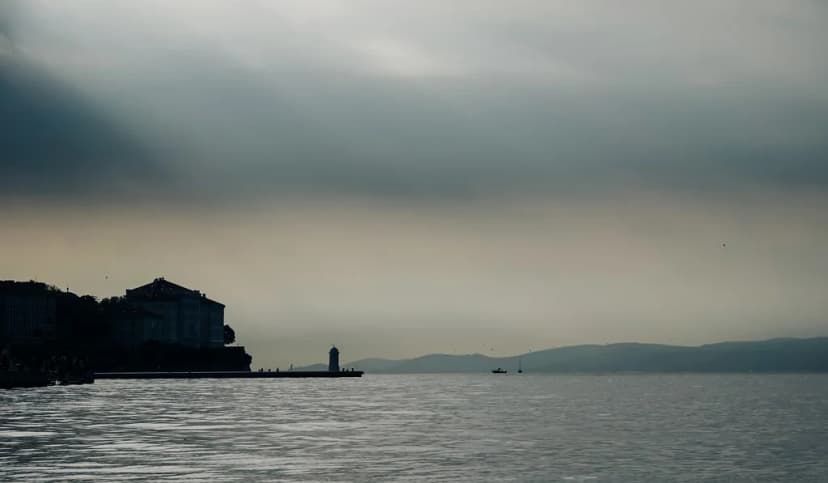
The single best hour in Zadar is the 30 minutes before and after sunset at the Sea Organ — the world's first sea-powered musical instrument — where the Greeting to the Sun's 22-metre solar disc begins its free light show; arrive by 7:00 PM in summer or 5:30 PM in shoulder season.
Zadar sits on a narrow peninsula surrounded by the sparkling blue Adriatic Sea. This ancient city blends Roman ruins with modern art installations in a way that few places in Europe can match. You will find history around every corner while walking the polished marble streets. Our Zadar old town guide helps you navigate the best sights and local secrets without wasting a single hour.
Most travelers start their journey at the massive stone walls protecting the city center. Exploring the peninsula on foot is the only way to see everything clearly, since the old town is largely car-free. Many visitors find that one long day covers the main highlights, but two days allows you to linger over meals and catch both the morning market and the evening light show. Planning ahead ensures you catch the famous sunset without battling heavy crowds along the Riva promenade.
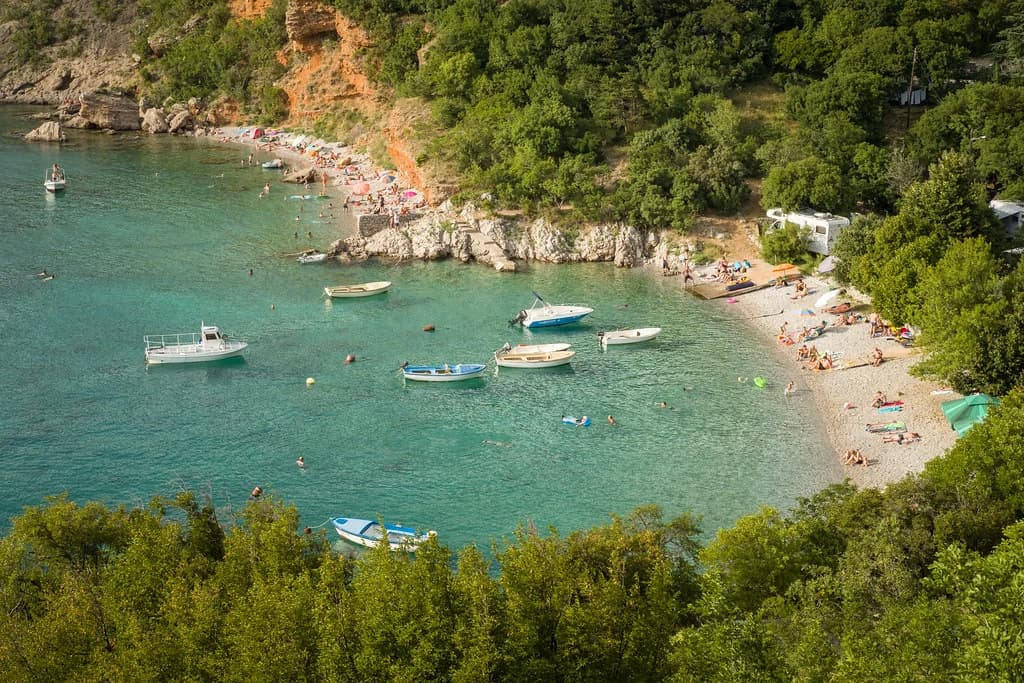
The city offers a mix of quiet churches and lively waterfront cafes. Walking through the Land Gate feels like stepping back into a medieval time capsule. Several day trips from Zadar to Plitvice Lakes and Kornati Islands are easy to arrange using the old town as a base. After exploring the old town, head to the best beaches near Zadar for an afternoon swim. Prepare for a day filled with salty air, warm stone, and ancient stories that stretch back over 3,000 years.
Exploring Ancient Landmarks of Zadar Old Town
The Roman Forum is the undisputed centerpiece of Zadar's ancient heritage and the largest Roman forum on the eastern Adriatic coast. Commissioned by Emperor Augustus in the 1st century BC and completed under Tiberius, it once served as the administrative and civic heart of the Roman colony of Iader. Today you can walk directly among the original stone fragments, column bases, and a striking single votive column that has stood for nearly two millennia. Entry to the open-air site is free for all visitors, making it one of the best value archaeological sites in Croatia.
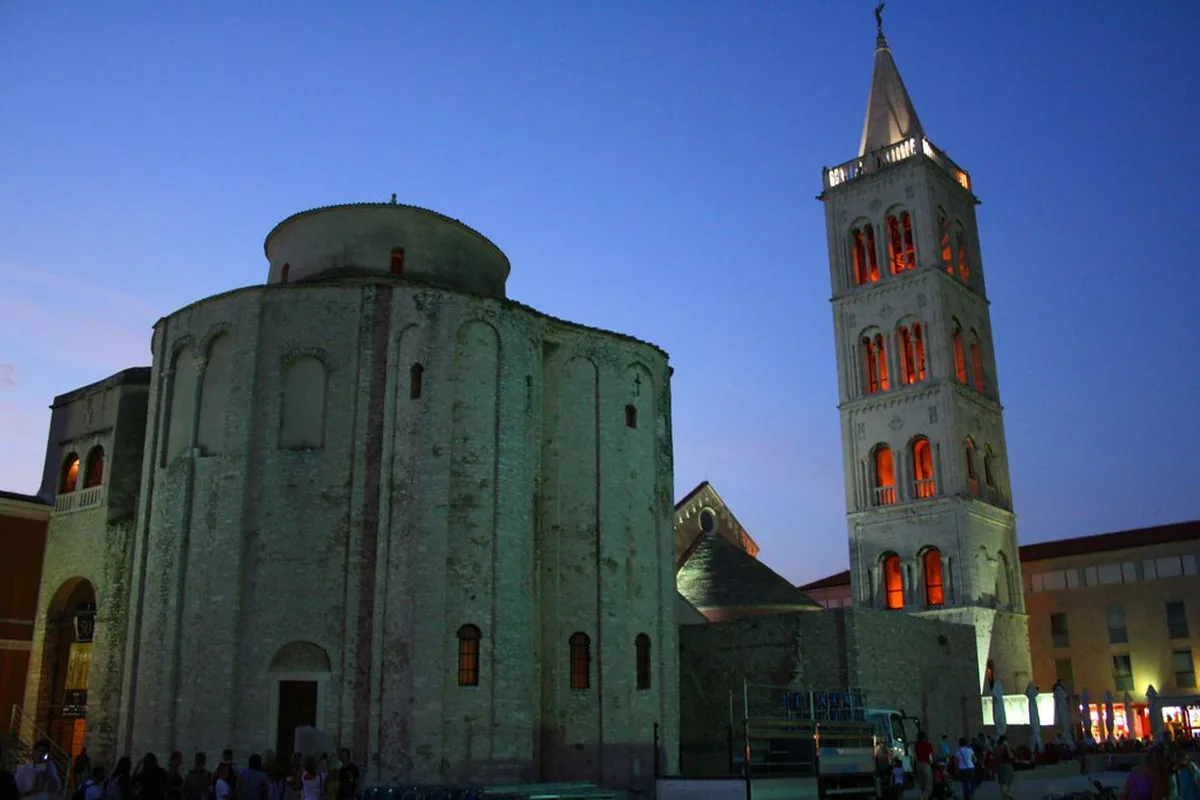
St. Donatus Church rises directly above the forum's foundations and is Zadar's most iconic building. Built in the 9th century, this pre-Romanesque structure is famous for its distinctive round shape, which is unique in Croatian architecture and unusual anywhere in Europe. The circular plan was partly dictated by the Roman remains it was built upon — you can still see Roman stonework incorporated into the lower walls. Admission costs €5 in 2026 and includes access to the interior, where the bare stone creates extraordinary acoustics. The church hosts a prestigious summer classical concert series called Musical Evenings in St. Donatus, running from July through August; tickets typically cost €15–25 and sell out fast, so book ahead online.
The Cathedral of St. Anastasia stands immediately adjacent to St. Donatus and represents Zadar's most important religious building. Construction began in the 12th century and continued through the 13th, producing a Romanesque façade decorated with elegant blind arcading and a rose window. The interior houses the relics of St. Anastasia and some beautifully preserved medieval stonework. Entry to the cathedral itself is free, while climbing the adjacent bell tower costs €3 in 2026. The tower provides the best elevated view in the old town — from the top you can see the entire peninsula, the channel, and the islands of Ugljan and Pašman stretching across the horizon. Wear proper footwear as the steps are steep and narrow.
The Archaeological Museum occupies a modern building directly across from the cathedral and holds one of Croatia's most important collections of artifacts. Exhibits span from the Stone Age through Roman and early medieval periods, with particular strength in Roman glass, jewellery, and everyday objects found at the Forum site. Standard tickets cost €5 for adults in 2026, with reduced rates for students and families. Budget at least 90 minutes if you want to read the English-language panels and appreciate the full chronological sweep. The museum shop stocks quality replica items and illustrated guidebooks for a reasonable €10–15.
The Church of St. Mary and its Permanent Exhibition of Church Art, locally known as Gold and Silver of Zadar, deserves a dedicated stop. The exhibition displays centuries of religious goldsmithing, reliquaries, and embroidery from Zadar's convents and churches — it is considered one of the finest collections of Dalmatian sacral art. Admission costs around €5 and the collection is compact enough to see properly in 45 minutes.
Modern Art: Sea Organ and Sun Salutation
The Sea Organ is one of the most original public art installations in Europe and the world's first musical instrument powered by sea waves. Architect Nikola Bašić completed the project in 2005 and it has won multiple international design awards since. The installation consists of 35 organ pipes built into the marble steps that descend into the Adriatic at the northwestern tip of the peninsula. As waves push and pull water through the pipes, they force air up through whistles of varying sizes, generating chords that change continuously depending on wave height, direction, and frequency. The result is an eerie, meditative harmony that is never exactly the same twice. Entry is completely free and the pipes play around the clock, though the music is loudest when there is a moderate swell or a steady afternoon breeze.
The Greeting to the Sun sits immediately adjacent to the Sea Organ and is equally impressive after dark. This 22-metre circular disc of solar glass panels is set flush into the Riva promenade and spends the daylight hours absorbing energy. At dusk it begins a programmed light display that mimics the colours and movements of the solar system — purples and blues give way to oranges and reds in patterns choreographed by Bašić. The display is entirely free and runs through the night until sunrise. Alfred Hitchcock famously visited Zadar in the 1960s and wrote that he had witnessed the most beautiful sunset in the world here; the Greeting to the Sun transforms that sunset into something that continues long after dark. Arrive 30 minutes before local sunset to watch both the natural and artificial light shows overlap seamlessly.
Crowds at the waterfront peak sharply in July and August, when the Riva can feel genuinely congested around sunset. Visiting on a weekday morning offers a completely different experience — the organ plays to almost no one and the reflections on the water are extraordinary. Walking to the far end of the pier, beyond the main seating steps, usually reveals a quieter vantage point even at peak times. Local musicians often play nearby during the evenings, and the combination of improvised folk music against the organ's drone is an experience unique to Zadar.
The Riva promenade stretches the full length of the western waterfront and connects the Sea Organ to the Land Gate. It is wide enough for cyclists and pedestrians to coexist comfortably, and benches are placed at regular intervals. Swimming is permitted from the lower marble steps if the water is calm; the sea here is exceptionally clean. Early morning walkers will find this a genuinely peaceful route before the tourist day begins, and it also provides the clearest line-of-sight photographs of the offshore islands without boat traffic in the frame.
Historic Gates and Hidden Squares
The Land Gate is the grandest of Zadar's city entrances and one of the finest Renaissance monuments in the entire Dalmatian region. Completed in 1543 to a design attributed to Michele Sanmicheli, the gate features an imposing triumphal arch format with a central vehicle arch flanked by two narrower pedestrian passages. Above the central arch a large carved relief of the winged lion of St. Mark — the symbol of the Venetian Republic that controlled Zadar for most of its history — dominates the facade. A plaque above records victories over the Ottomans. Passing through the gate from the Foša harbour side gives you an immediate sense of the city's layered defences, since the gate connects directly to the substantial Venetian-era walls that still ring the peninsula almost completely intact.
Five Wells Square, known locally as Trg Pet Bunara, is one of Zadar's most historically charged public spaces. The five stone wellheads were constructed in 1574 using stone removed from a demolished medieval tower, and they were specifically designed to supply the city with water during Ottoman sieges, which lasted for years at a time. The wells served the civilian population for centuries and were only decommissioned in the early 20th century. Today the square is a tranquil neighbourhood gathering spot, lined with cafes and a small playground, and it hosts local markets and open-air events during summer. It is an excellent lunch stop, quieter than the main Kalelarga strip, with comparable food at slightly lower prices.
Queen Jelena Madijevka Park sits directly above Five Wells Square on the old bastions and holds the distinction of being the first public park established in Croatia. Created in the 19th century, it uses the thick walls and raised earthworks of the Venetian defensive perimeter as its foundations, which makes it several metres above street level. The park is densely shaded with mature trees and provides genuine relief from midsummer heat. It is open 24 hours, costs nothing, and offers views over both the old town rooftops and the surrounding channel. The park connects to the wall promenade, allowing you to walk a good section of the fortifications on foot.
The city walls themselves hold UNESCO World Heritage status as part of the Venetian Works of Defence Between the 15th and 17th Centuries, a transnational inscription shared with sites in Italy and Montenegro. The walls in Zadar remain remarkably complete and several sections are open to walkers. New interpretive signage installed in recent years explains the engineering of each bastion in English, Italian, and Croatian. The best-preserved stretch runs between the Land Gate and the Kapetanova Tower near the harbour entrance. Walking the walls takes 30–45 minutes at a leisurely pace and is free of charge.
Local Flavors and the Spirit of Kalelarga
Kalelarga is the main street and the social spine of Zadar old town. Its full Croatian name is Široka Ulica, meaning Wide Street, but residents universally use the old Venetian name Callelarga, contracted over centuries to Kalelarga. The street runs east to west across the peninsula, connecting the People's Square at its eastern end to the People's Gate near the waterfront. It is lined with a changing mix of ice cream parlors, souvenir shops, linen boutiques, pharmacies, and cafes, reflecting the fact that this is a genuinely lived-in street rather than a purely tourist strip. Walking it end to end takes about eight minutes at a stroll, but you will want to stop several times. Restaurant mains along Kalelarga and its immediate side streets typically run €14–22 in 2026, with grilled fish at the higher end and pasta and pizza at the lower end.
Traditional Dalmatian seafood dominates the menus in most local taverns, which are called konobas. Black risotto, made with cuttlefish ink and fresh squid, is the signature dish and costs €14–18 for a generous portion. Fresh fish is delivered directly from the Adriatic fishing fleet each morning and sold by weight at many restaurants; expect to pay €40–60 per kilogram for whole grilled sea bream or sea bass, which typically feeds two people as a main course. Always ask what the daily catch is — the waiter will usually tell you exactly which boat it came from. Peka, a slow-cooked dish of lamb or octopus baked under a bell-shaped lid covered with embers, requires ordering in advance (at least 24 hours) but is worth planning around.
Maraschino liqueur is Zadar's most famous export and one of the oldest continuously produced liqueurs in the world. The Luxardo family originally produced it here using Marasca cherries, a sour variety that grows only in the hinterland around the city, and the recipe dates to Franciscan monks in the 16th century. Production moved during World War Two but the local Zadranke distillery continues a regional version using the original cherry variety. A 0.5-litre bottle costs €15–25 depending on the brand and can be found in every supermarket, gift shop, and duty-free outlet in the airport. It is drunk neat over ice, used in cocktails, or poured over vanilla ice cream — all three options are on menus throughout the old town.
The Zadar Market, called Pijaca by locals, opens at dawn every day but is at its best on Saturday mornings when farmers from the surrounding islands and hinterland bring seasonal produce. Figs, pomegranates, dried herbs, olives, and honeys from the karst highlands are all available at prices that undercut any supermarket. The most prized purchase is Paški sir — sheep's milk cheese from the island of Pag, aged in olive oil and herbs, with a sharp, crumbly texture that goes perfectly with local red wine. A 300-gram wedge costs around €8–12 depending on age. The market is located just outside the main city walls on the landward side, a two-minute walk from the Land Gate, and closes by noon.
Narodni Trg: People's Square and the City Loggia
Narodni Trg, or People's Square, has been the civic heart of Zadar since the medieval period and remains the most naturally lively public space in the old town. The square is flanked on three sides by significant historical buildings: the City Loggia to the north, the City Guardhouse to the east, and a row of residential palaces to the south. In the centre stands a clock tower that was raised in the early 16th century and is still the main reference point locals use when giving directions. The square is completely pedestrianised and its polished limestone paving becomes a reflective mirror after rain — one of the most photographed scenes in the city.
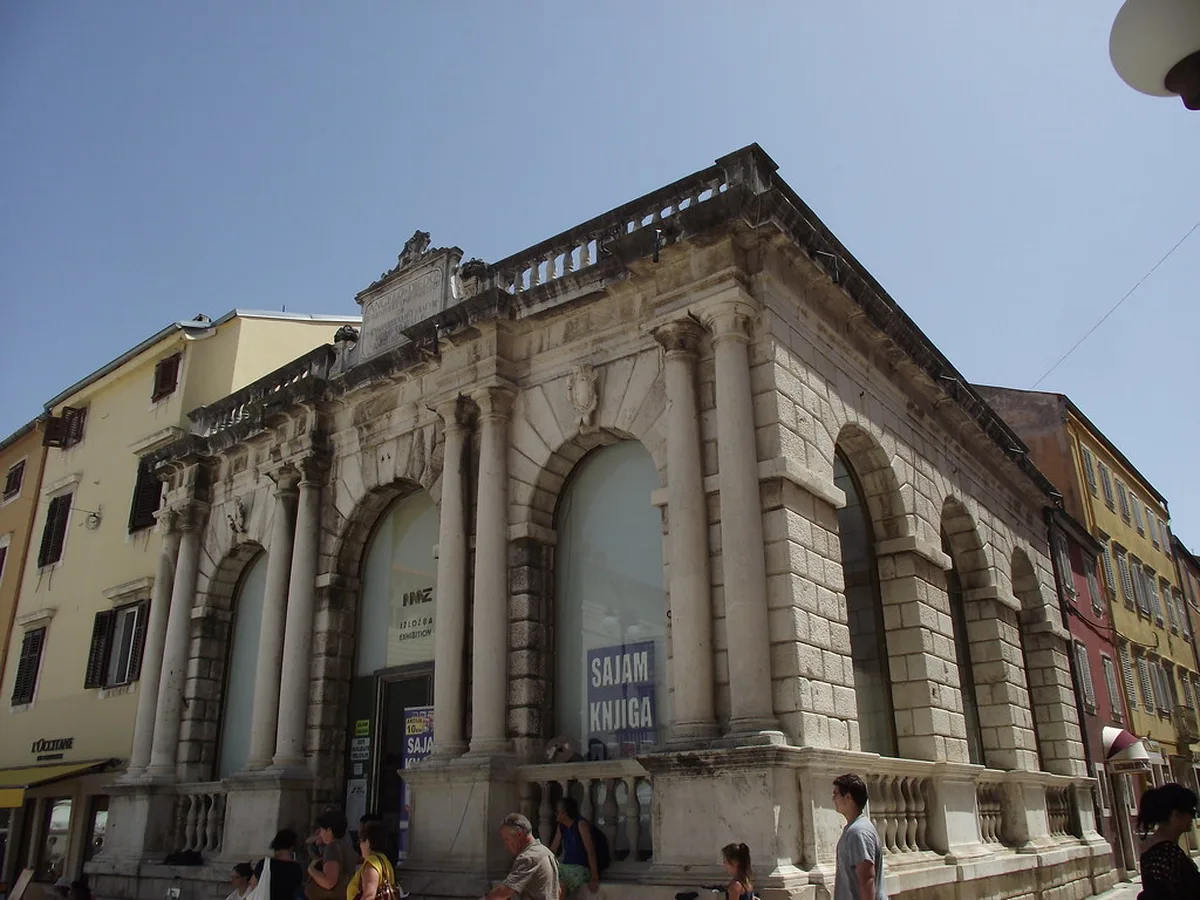
The City Loggia, built in 1565 in a late Renaissance style, originally served as the court and public gathering place under Venetian administration. It was later enclosed to serve various functions and now operates as an exhibition space hosting rotating art and photography shows. Entry is usually free and the exhibitions change every two to three weeks during the tourist season. The adjacent City Guardhouse, dating from the 16th century as well, has been converted into a cinema — one of the more charming repurposings of a historic building you will encounter anywhere in Croatia.
From Narodni Trg it is a 90-second walk to Kalelarga in one direction and to the cathedral complex in the other. This makes the square the natural hub for structuring your day — begin here in the morning with a coffee at one of the outdoor terraces, then radiate outward to the landmarks in sequence. Outdoor seating at the square's cafes is occupied from 7:00 AM through midnight during summer. Prices are mid-range: an espresso costs €1.50–2.00 and a local draft beer runs €3.50–4.50. The square hosts occasional live music events and the main Christmas market in late December, when mulled wine and roasted chestnut vendors set up around the clock tower.
The Fosa harbour sits just outside the Land Gate and is one of the most photogenic spots in the city for a specific reason: the small natural inlet is framed by the city walls on one side and a row of palms on the other, creating a pocket of calm even when the main Riva is busy. Several excellent fish restaurants have terraces directly above the water here. It is also the departure point for some small boat excursions to nearby beaches and islands, bookable directly from the dock for €15–30 depending on the destination.
Essential Logistics: Zadar Old Town Guide
The entire old town is a pedestrian-only zone built on polished limestone and marble paving that becomes slippery when wet. Wear flat, rubber-soled shoes — sandals with grip are fine in dry conditions but flip-flops are genuinely dangerous after rain. The peninsula is small enough that you can cover it end to end in 15 minutes of walking, but plan for a full day given the number of sites. Distances are short but the density of interesting stops is very high.
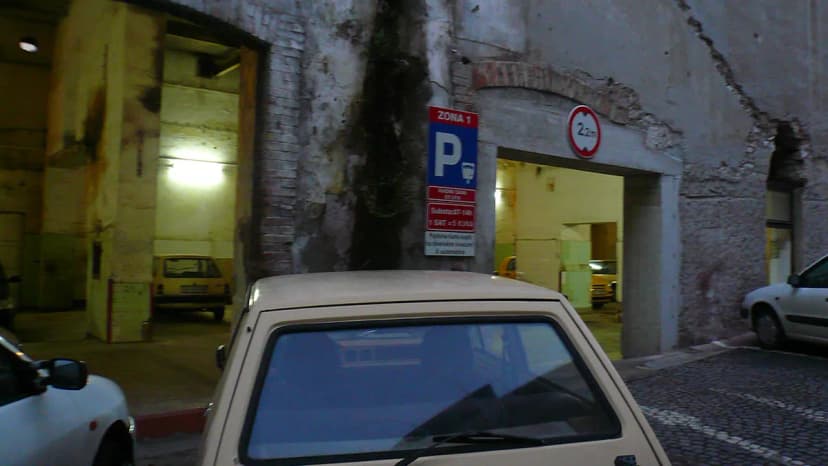
Driving into the old town is restricted to residents and delivery vehicles with special permits. If you arrive by car, the closest parking is in the Varoš area immediately outside the walls; Zone 1 parking costs €1.60 per hour in 2026 with a two-hour maximum, payable by SMS or coin machine. A larger and cheaper option is the Jazine parking garage near the bridge connecting the peninsula to the mainland, which charges around €1.00 per hour with no time limit. From there it is a five-minute walk across the bridge and through the Land Gate.
The Barkajoli rowboat service is a Zadar institution that has operated continuously for over 800 years. Small wooden rowboats ferry passengers between the old town peninsula and the Gaženica area on the mainland side, saving a 15-minute walk via the bridge. The crossing takes three to four minutes and costs €1 per person in 2026. The boats run daily from morning until late evening; there is no fixed schedule — you simply walk to the small dock near the cathedral and wait, usually no more than five minutes. This is one of those experiences that costs almost nothing but feels like time travel.
Public buses connect the old town to the main bus and train stations on the edge of the city. Tickets cost around €1.50–2.00 purchased from the driver. Many travelers also use Zadar as a base for day trips from Zadar to Plitvice Lakes National Park (approximately €30–40 for an organised tour or €15–20 by bus each way) and Krka National Park (similar pricing). Book national park tickets online well in advance in July and August as daily entry caps are enforced. The Jadrolinija ferry terminal in Zadar serves the islands of Ugljan, Pašman, and Dugi Otok; ferries run frequently and a single ticket costs €3–6 depending on the route.
Free Wi-Fi branded as Zadar Free Air is available throughout most public squares and from most cafes, which rarely require a password. The signal is reliable enough for navigation apps and messaging. The local supermarket chain Konzum has two branches inside or adjacent to the old town walls for budget shopping; a litre of local olive oil costs around €6 and a bottle of local Plavac Mali wine runs €5–12.
- Parking Options
- Zone 1 (Varoš, outside walls): €1.60/hour, 2-hour max, SMS or coin payment
- Jazine garage (near bridge): ~€1.00/hour, no time limit
- Barkajoli Rowboat Ferry
- Route: Old Town dock ↔ Mainland (Gaženica side)
- Price: €1 per person (2026)
- Duration: 3–4 minutes
- Hours: Daily morning to late evening, no fixed timetable
- Key Entry Prices Summary (2026)
- Roman Forum: free
- St. Donatus Church: €5
- Cathedral of St. Anastasia: free (bell tower €3)
- Archaeological Museum: €5
- Gold and Silver of Zadar exhibition: ~€5
- Sea Organ and Greeting to the Sun: free
- City Walls: free (most sections)
Museum of Ancient Glass and the Roman Forum: Zadar's Archaeological Heart
The Museum of Ancient Glass is one of the most distinctive specialist museums in Croatia and deserves a dedicated stop on any itinerary for Zadar Old Town. Housed in the beautifully restored 19th-century Cosmacendi Palace on the edge of the Roman Forum, the museum holds the largest collection of ancient Roman glass in Southeast Europe. The exhibits span from the 1st century BC through the 4th century AD and include perfume flasks, drinking vessels, cosmetic containers, and amphorae recovered from archaeological sites across the broader Zadar region. Standard admission costs €5 for adults in 2026, with concessions available for students and children. The museum is open Tuesday to Sunday from 9:00 AM to 9:00 PM in summer (June–September) and 9:00 AM to 5:00 PM in the shoulder months; it is closed on Mondays throughout the year. Allow at least 60 minutes to see the collection properly — the English-language signage is thorough and the objects are displayed with excellent lighting that shows the translucency and colour range of Roman glasswork. Live glassblowing demonstrations are occasionally staged in the museum courtyard; check the noticeboard at the entrance for the current schedule, as demonstration days are worth timing your visit around.
The Roman Forum, immediately adjacent, is the largest preserved Roman forum on the eastern Adriatic coast and the logical companion visit. Commissioned by Emperor Augustus in the first century BC and completed under Tiberius, the forum measured roughly 90 by 45 metres and was surrounded by porticoes, temples, and administrative buildings whose stone foundations remain clearly visible at ground level. The single surviving Corinthian column, known locally as the Pillar of Shame because it was historically used as a public pillory, stands to a height of about 13 metres and is the defining vertical element of the entire archaeological zone. Entry to the open-air forum is completely free and it is accessible around the clock, making it ideal for an early morning or late evening stroll when the light is low and the polished marble paving glows. A new bilingual information trail was installed in 2024, with detailed panels at each excavated structure explaining their original function and construction sequence. The forum also serves as the main outdoor concert and event venue in summer — visiting during the Musical Evenings in St. Donatus festival (July–August) means the forum is lit dramatically after dark.
Walking between the Museum of Ancient Glass and St. Donatus Church takes under two minutes. The tight proximity of the museum, the forum, and the church makes this corner of the old town the densest concentration of historic significance anywhere on the peninsula. If your time in Zadar is limited to half a day, prioritise this triangle: spend 60 minutes in the museum, 30 minutes in the forum, and 20 minutes in St. Donatus Church for €10 total in admission. The Archaeological Museum on the opposite side of the cathedral adds a further €5 and another 90 minutes for visitors who want the full chronological picture, covering periods from the Stone Age through early medieval Croatia with particular depth in Roman-era everyday objects. Together, these four sites constitute one of the most complete and affordable Roman heritage experiences in the entire Adriatic region.
Photography is permitted throughout the open-air forum and in most areas of the Museum of Ancient Glass (flash photography is prohibited inside to protect the ancient glass pigments from UV degradation). The museum gift shop stocks a compact but well-curated selection of illustrated catalogues, replica Roman glass jewellery, and prints of the most significant objects in the collection. Prices range from €5 for a postcard set to €35 for a full-colour hardback catalogue — reasonable for the quality. The café on the museum's ground floor serves espresso and cold drinks, making it one of the few places inside the old town where you can sit in an air-conditioned space during July and August without committing to a full restaurant meal.
Frequently Asked Questions
Is Zadar Old Town worth visiting?
Yes, Zadar Old Town is worth visiting. It combines Europe's largest Roman forum on the eastern Adriatic, the world's first sea-powered musical instrument (the Sea Organ), a free solar light show (Greeting to the Sun), and well-preserved Venetian walls — all within a 15-minute walk. Most major sights are free or cost under €5, making it excellent value compared to other Dalmatian destinations.
How much time do I need in Zadar Old Town?
One full day covers all major landmarks: the Roman Forum, St. Donatus Church, the Cathedral, Five Wells Square, Kalelarga, and the Sea Organ at sunset. If you want to visit the Archaeological Museum, the Gold and Silver exhibition, and enjoy a sit-down meal without rushing, allow two days. An overnight stay also lets you see the Greeting to the Sun light show after dark, which is a highlight many one-day visitors miss.
Can I drive inside Zadar Old Town?
No, driving inside Zadar Old Town is not possible for tourists. The peninsula is pedestrian-only. Park in the Varoš Zone 1 lots directly outside the walls (€1.60/hour, 2-hour max) or in the Jazine garage near the bridge (~€1.00/hour, unlimited time). From either location it is a five-minute walk to the main sights.
What is the best time to see the Sea Organ?
The Sea Organ is best at sunset when the music accompanies the sky's changing colours. In summer, sunset falls around 8:30–9:00 PM; in shoulder season (April–May, September–October) it is closer to 7:00–8:00 PM. Arrive 30 minutes early to get a spot on the marble steps. Early morning is the quietest time — the organ plays all night and the sound is clearest with no crowd noise.
How much does it cost to visit Zadar Old Town in 2026?
The main attractions are free: Roman Forum, Sea Organ, Greeting to the Sun, Five Wells Square, and the city walls. Paid highlights cost €5 for St. Donatus Church, €3 for the Cathedral Bell Tower, and €5 for the Archaeological Museum. A full day of sightseeing costs under €15 in entrance fees. Restaurant mains on Kalelarga run €14–22; a coffee at a square cafe costs €1.50–2.00. Croatia uses the Euro since joining the Eurozone in January 2023.
What is the best day to visit the Zadar market?
Saturday morning is the best time to visit Zadar's Pijaca market. Island farmers and hinterland producers bring their full range of goods — seasonal fruits, dried herbs, Pag sheep's cheese, local honeys, and olive oil — and the atmosphere is at its most lively. The market is a two-minute walk from the Land Gate and runs from dawn until around noon. Weekday mornings are quieter but have a smaller selection of island produce.
Is the Museum of Ancient Glass in Zadar worth visiting?
Yes, the Museum of Ancient Glass in Zadar is worth visiting for anyone with an interest in Roman history or decorative arts. It holds the largest collection of ancient Roman glass in Southeast Europe, displayed in the restored Cosmacendi Palace next to the Roman Forum. Admission costs €5 in 2026. The museum opens Tuesday to Sunday from 9:00 AM to 9:00 PM in summer and 9:00 AM to 5:00 PM in shoulder season; it is closed on Mondays. Allow 60 minutes and check for live glassblowing demonstrations on the day of your visit.
Zadar Old Town delivers more history and atmosphere per square metre than almost anywhere else on the Dalmatian coast, and it does so without charging a premium for the privilege. The Roman Forum, St. Donatus, the Sea Organ, and the Greeting to the Sun form a circuit that takes a single afternoon but leaves an impression that lasts far longer. Pair the evening light show with dinner on Kalelarga, a glass of Maraschino over ice, and the quiet of Five Wells Square after the crowds have thinned, and you have the kind of travel day that justifies the whole trip.
If you want to extend your time in the region, the best day trips from Zadar — Plitvice Lakes, Krka, and the Kornati islands — are all within easy reach. Zadar also makes an excellent gateway for exploring the broader Croatia travel guide, with Split, Dubrovnik, and Rovinj all accessible by bus, ferry, or a short flight. For accommodation, the old town peninsula itself has a handful of boutique apartments and small hotels within walking distance of everything. Book early for July and August; the city fills up fast and the best waterfront places sell out months in advance. Safe travels on one of the Adriatic's most rewarding peninsulas.