Exploring the Capital: A Bratislava Old Town Guide
Bratislava Old Town is compact and fully walkable in 2–3 hours; top attractions include Bratislava Castle (€10 entry), the Old Town Hall (€5 tower, €8 museum), and Michael's Gate (free exterior, tower €5); the Main Square (Hlavné námestie) and Roland Fountain are free to visit in 2026.
St. Martin's Cathedral is free to enter; the Blue Church (Art Nouveau, free exterior, €1 suggested donation inside) is 10 min walk from Old Town; craft beer at local pubs costs €2–3.50/pint; a traditional Slovak meal (bryndzové halušky) costs €6–9 at Old Town restaurants in 2026.
Bratislava offers a compact and charming historic center that many travelers overlook. This Bratislava Old Town guide helps you navigate the winding alleys and vibrant squares effectively. You will find a blend of medieval history and modern cafe culture within these pedestrian zones. Most visitors can explore the main highlights in a single afternoon, making it one of Europe's most rewarding half-day city breaks.
Walking through the cobblestone streets reveals a city that was once a coronation site for kings. The atmosphere remains relaxed compared to the bustling capitals of nearby Vienna or Prague. You can enjoy high-quality dining and historic architecture without the overwhelming crowds. Planning your route ahead of time ensures you catch every hidden detail, from the brass coronation-route markers underfoot to the Renaissance doorways lining the back lanes off Michalská Street.
Must-See Landmarks in the Historic Center
Michael's Gate (Michalská brána) stands as the only fully preserved gate of the city's medieval fortifications, dating to the 14th century. The octagonal baroque tower rises 51 metres above Michalská Street and can be spotted from nearly every corner of the Old Town. Visitors can climb the tower for a panoramic view stretching over the red-roofed buildings below and, on clear days, toward the Austrian border hills. Admission to the Museum of Arms inside costs €6 per adult and €3 per child in 2026. The tower is open Tuesday through Sunday, 10:00 AM to 5:00 PM, with last entry at 4:30 PM. Allow around 30 minutes for the full visit including the museum displays and the rooftop terrace.
Main Square (Hlavné námestie) serves as the heart of the historic district and hosts the Easter and Christmas markets that draw visitors from across Central Europe. The square is framed by the Old Town Hall on its eastern edge and the 16th-century Maximilian Fountain — also known as the Roland Fountain — at its centre, which is the oldest public fountain in Bratislava and dates to 1572. Most tourists also enjoy spotting the quirky bronze statues scattered nearby, including 'Čumil the Man at Work' on Panská Street, which peers up from a manhole cover and makes for one of the city's most photographed moments. If you have extra time, day trips from Bratislava can take you to nearby attractions like Devín Castle, which sits at the confluence of the Danube and Morava rivers. These photo opportunities are entirely free and best enjoyed before 10:00 AM when river-cruise tour groups arrive en masse and the square fills quickly.
The Old Town Hall (Stará radnica) is the oldest city hall in the country, with its earliest sections dating to the 13th century. Today it houses the City Museum (Múzeum mesta Bratislavy), which traces the development of the city from medieval times to the 20th century through furniture, weapons, archival documents, and remarkable Gothic cellars. Entry to the museum costs €8 for adults and €4 for students and children in 2026. Opening hours are Tuesday to Friday 10:00 AM to 5:00 PM, Saturday and Sunday 11:00 AM to 6:00 PM; closed Mondays. Climbing the Gothic tower costs an additional €5 but rewards you with an unobstructed view directly into Main Square and across the rooftops of the Old Town. Budget around 45 minutes for a thorough visit, including the permanent exhibition on the ground and first floors and the cellar vaults below.
Primate's Palace (Primaciálny palác), just steps off Main Square on Primaciálne námestie, is a neoclassical pink landmark that hosted the signing of the Pressburg Peace in 1805 following Napoleon's victory at Austerlitz. Its Hall of Mirrors is open to the public free of charge on weekdays from 8:00 AM to 5:00 PM, making it one of the best free cultural stops in the entire Old Town. The building also houses the internationally recognised Hall of Mirrors tapestries — six rare English Flemish panels from the early 17th century depicting the story of Hero and Leander — which were discovered bricked up behind plaster during 20th-century renovations and are now considered among the finest textile artworks in Central Europe. Entry to view the tapestries is included in the free weekday admission, and a small gift shop near the entrance sells locally produced prints and souvenirs. For more historical context, see the Wikipedia article on Primate's Palace.
For visitors with limited time, a logical sequence is: start at Michael's Gate (tower climb, 30 min), walk south along Michalská Street to Main Square (30–45 min to browse, photograph the Roland Fountain and Čumil statue), then visit the Old Town Hall museum and tower (45 min), and finish with a free visit to Primate's Palace Hall of Mirrors (15 min). This loop covers the essential landmarks in roughly 2.5 hours without backtracking, leaving the afternoon free for the castle or the Blue Church.
- Michael's Gate Tower
- Type: Medieval fortification gate (14th century)
- Cost: €6 adult / €3 child
- Hours: Tue–Sun 10:00–17:00 (last entry 16:30)
- View: 51m rooftop city panorama
- Old Town Hall & City Museum
- Type: Gothic–baroque city museum
- Cost: €8 adult / €4 child; tower €5
- Hours: Tue–Fri 10:00–17:00, Sat–Sun 11:00–18:00
- Location: Main Square, east side
- Čumil the Man at Work
- Type: Bronze street statue (1997)
- Cost: Free
- Location: Corner of Panská and Rybárska brána streets
- Tip: Watch your step at the manhole
- Primate's Palace
- Type: Neoclassical palace (1781)
- Cost: Hall of Mirrors free on weekdays
- Hours: Mon–Fri 08:00–17:00
- Highlight: Flemish tapestries, 1805 Pressburg Peace treaty room
Bratislava Castle: Views, Museum, and History
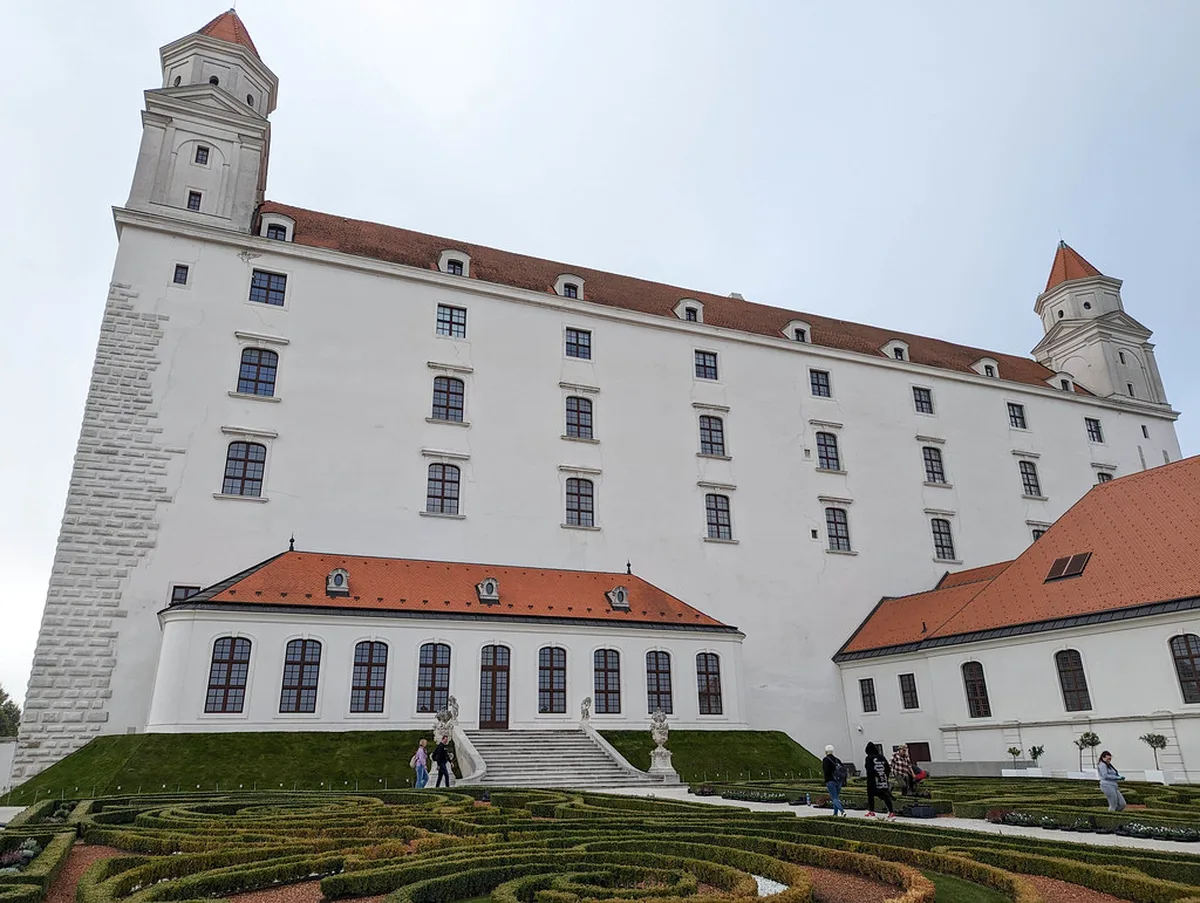
Bratislava Castle (Bratislavský hrad) sits on a rocky hill 85 metres above the Danube and is the most visible landmark in the entire city. The striking white rectangular structure with four corner towers is often nicknamed the "upturned table" by locals due to its distinctive silhouette. It overlooks not only the Old Town below but also the Danube river bend, stretching your panoramic gaze into both Austria and Hungary on a clear day. The castle hill is roughly a 10-minute walk from Main Square through the Old Town, following Zámocká Street uphill past the old fortification walls and through the castle gate.
The current white exterior dates to a meticulous reconstruction carried out between 1953 and 1968, following a devastating fire in 1811 that gutted the interior and left the structure as a roofless ruin for nearly 150 years. Walking the outer ramparts is free at all times and rewards visitors with one of the best viewpoints over the city, the Danube, and the Austrian plains beyond. The grounds contain several garden terraces, formal hedges, and benches that are popular with locals in the evening hours when the castle is dramatically floodlit against the night sky.
Inside, the Slovak National Museum's History Museum occupies the main castle building. The permanent collection covers prehistory through medieval Slovakia, with highlights including the Venus of Moravany — a 22,800-year-old mammoth-ivory figurine — and a full floor dedicated to Great Moravian Empire artefacts including reconstructed jewellery and weaponry. Adult admission to the museum is €10, with a reduced rate of €5 for students and children aged 6 to 15 in 2026. Children under 6 enter free. Museum hours are Tuesday to Sunday from 10:00 AM to 6:00 PM; closed Mondays. The combined ticket covering both the permanent collection and any temporary exhibitions costs €14 and represents the best value for first-time visitors.
The castle treasury on the upper floor displays the coronation crown replica, royal sceptres, and jewellery from the Habsburg era. Bratislava served as the coronation city for Hungarian monarchs from 1563 to 1830 — eleven kings and eight queens were crowned here over more than 250 years — a legacy that shaped much of the city's architecture and urban layout still visible in the Old Town below. A separate audioguide (€2) is available at the ticket desk and significantly enriches the visit by explaining the Habsburg-era rooms in context. Total time for the castle hill including the museum and rampart walk is approximately 2 hours; factor in an extra 15–20 minutes if you want to sit on the terrace and enjoy the view across the river.
Getting there is straightforward: follow the yellow directional signs on Michalská Street past Michael's Gate and continue up the zigzag ramp. Alternatively, bus routes 203 and 207 stop at Hrad (Castle) from the city centre, taking approximately 5 minutes from the Poštová stop on Obchodná Street. The castle grounds are accessible until 11:00 PM, with the rampart viewpoint remaining open until dusk. There is no parking directly at the gate; the nearest paid car park is on Žižkova Street below the castle hill, with a 2026 rate of approximately €1.50 per hour. Comfortable walking shoes are essential as the approach ramp is steep and the ramparts are paved with uneven stone sets.
Discovering the Coronation Route and Hidden Alleys
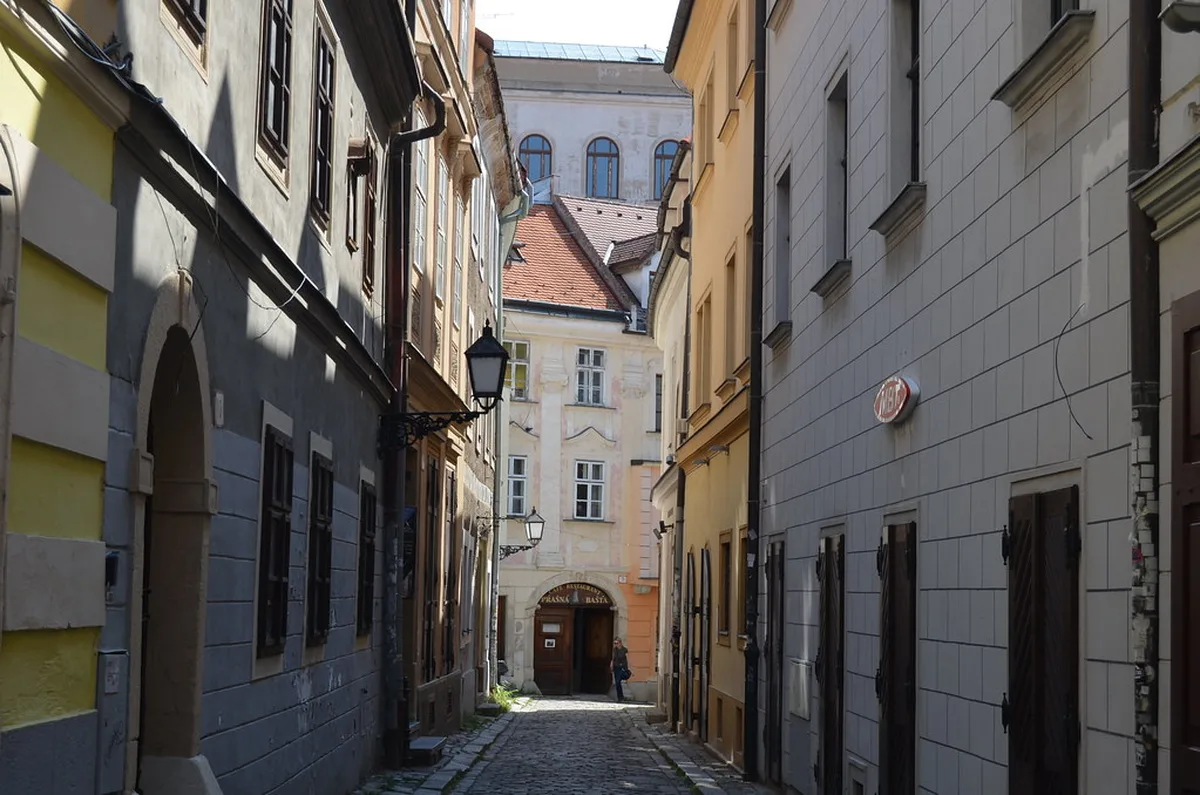
One common mistake is sticking only to the main thoroughfares near the Danube. Venture toward Kapitulská Street to experience the oldest and quietest part of the city. This atmospheric lane, just two minutes' walk from St. Martin's Cathedral, feels like a time capsule with its weathered stone walls, ivy-covered facades, and near-complete absence of commercial shops. It provides a peaceful contrast to the bustling tourist zones on Michalská and Obchodná Streets nearby and gives a genuine sense of what medieval Bratislava must have felt like centuries ago.
The Coronation Route is marked by small brass crowns embedded in the pavement, beginning at St. Martin's Cathedral and winding northward through the Old Town to the Franciscan Church. These 57 metal markers guide you along the ceremonial path taken by Hungarian monarchs between 1563 and 1830 during their coronation processions. Following this trail is a great way to structure your Bratislava walking tour through the historic center. It leads you directly to the impressive St. Martin's Cathedral on the south side of the Old Town, which stands just 50 metres from the SNP Bridge approach road. The entire route takes approximately 40 minutes at a leisurely pace with stops for photographs.
St. Martin's Cathedral (Katedrála sv. Martina) served as the coronation church for eleven Hungarian kings and eight queens over more than 250 years. Its Gothic architecture, begun in the 14th century, is immediately identifiable by the gilded crown replica — 300 kg of gilded iron — placed atop its 85-metre spire. Entry to the cathedral nave is free during visiting hours (Monday to Saturday 9:00 AM to 6:00 PM, Sunday 2:00 PM to 6:00 PM), though some areas including the crypt may require a small donation of €1 to €2. Respectful attire — covered shoulders and knees — is required when visiting this active Roman Catholic place of worship. The cathedral's interior contains notable baroque side altars, a Baroque organ dating to the 18th century, and a Gothic nave that creates a striking sense of space and height despite the relatively narrow exterior footprint.
Narrow side streets like Baštová and Beblavého offer a glimpse into the medieval layout of the city beyond the main tourist circuit. Beblavého Street is particularly interesting as it leads from the castle ramp past the Museum of Clocks (Múzeum hodín), where a collection of 18th and 19th-century timepieces is displayed in a Gothic merchant house (entry €3, open Tue–Fri 10:00–17:00, closed Mon and weekends). These alleys often house small galleries, antique dealers, and local craft shops that many visitors miss entirely when they stick to the main pedestrian spine. Take a moment to look up at the intricate balconies, Renaissance doorways, and stone carvings embedded above ground-level shop fronts — these small details tell the story of the city's once-thriving merchant class and remind you that Bratislava was, for centuries, one of the most prosperous cities in the Habsburg Empire.
The Franciscan Church (Františkánsky kostol), located on Františkánske námestie just north of Main Square, is another stop worth making on the Coronation Route. It is the oldest surviving church in Bratislava, with parts dating to the 13th century, and entry to the nave is free during morning services. The adjacent Franciscan courtyard garden provides a quiet resting point away from the busier squares. Combine this stop with a look at the Jesuit Church on the same square, which features a striking baroque interior with painted vaults and a late-17th-century pipe organ still used for recitals.
The Blue Church: Bratislava's Most Photographed Art Nouveau Gem
The Church of St. Elizabeth (Kostol sv. Alžbety), universally nicknamed the Blue Church for its distinctive cobalt-blue tilework and pastel facade, is one of the most visually arresting buildings in Central Europe. Located on Bezručova ulica — roughly a 12-minute walk southeast from Main Square — the church sits just outside the core pedestrian zone of the Old Town but is an unmissable detour for any visitor with even a passing interest in architecture or photography.
The church was designed by Hungarian architect Edmund Lechner and completed in 1913, making it a late masterpiece of the Hungarian Secession style — the Central European expression of Art Nouveau. Lechner, who is sometimes called the "Hungarian Gaudí" for his synthesis of folk motifs and modernist ornament, created a building that reads almost like a stage set: rounded apses, low turrets clustered around the central tower, and every surface encrusted with majolica ceramic tiles in shades of powder blue, white, and gold. The sculptural program on the exterior includes figurative reliefs depicting scenes from the life of St. Elizabeth of Hungary, who is closely associated with Bratislava (then Pozsony) and lived in the city as a child. The mosaics above the entrance portal are particularly detailed and worth examining up close before entering.
The exterior is free to view at any time and is best photographed in the early morning before 9:30 AM, when the soft directional light catches the blue glazed tiles and the narrow street is empty of visitors. From approximately 10:00 AM to 2:00 PM, organised tour groups — particularly those arriving by river cruise — converge on the church and make photography difficult. If you arrive mid-morning, wait until the group moves on, which usually takes 20–30 minutes. Late afternoon (after 4:00 PM) is also a good alternative for quieter conditions.
Entry to the interior is possible during designated visiting hours outside of regular Roman Catholic services. A suggested donation of €1 is requested at the door; there is no mandatory admission fee. Inside, the Art Nouveau detailing continues: fan-vaulted ceilings in blue and white, a central nave lined with fluted piers, and stained-glass windows that cast cool tinted light across the blue-and-white mosaic floor. The overall effect is unusually calm and harmonious for a building with such a visually busy exterior. Photography is generally permitted inside but flash is prohibited out of respect for the active congregation.
A natural pairing with the Blue Church visit is a short walk (5 minutes north) to the Grassalkovich Palace (Grasalkovičov palác), which serves as the official residence of the Slovak president. The formal baroque garden in front of the palace is open to the public free of charge Monday to Friday during daytime hours and provides a pleasant green space for a short break. The palace exterior, with its yellow-and-white facade, makes a strong visual contrast to the cobalt-blue of the church and gives you two very different architectural styles within a single short walk. On weekdays the garden is relatively uncrowded and popular with local office workers on lunch breaks.
To reach the Blue Church from Main Square: walk east along Uršulínska Street, turn right onto Jesenského ulica, then left onto Bezručova ulica; the church will be visible ahead on the right. The walk is flat and takes about 12 minutes. Combining the Blue Church and Grassalkovich Palace into a 45-minute loop is easy to slot between a morning in the Old Town and an afternoon visit to the castle.
Dining and Coffee Culture in Old Town
Slovak cuisine features hearty, filling dishes rooted in Central European peasant cooking traditions. The defining dish is bryndzové halušky — potato gnocchi-like dumplings served with a sharp, creamy sheep's cheese (bryndza) and topped with crispy smoked bacon bits. Most traditional taverns and Slovak restaurants in the Old Town serve this dish for €6 to €9 in 2026; prices at the front-terrace tourist spots on Main Square can be higher, reaching €11 to €13. Korzo on Obchodná Street and Reštaurácia Prašná Bašta near Michael's Gate are two reliable spots that consistently serve authentic versions at fair prices. Look for restaurants tucked away in the side alleys off Michalská Street to find more authentic flavours at a better price point than the front-row terrace spots overlooking the square.
A second classic dish worth ordering is kapustnica — a sour cabbage soup with smoked pork, mushrooms, and paprika, served as a starter for €3 to €5. For a lighter option, syrový vyprážaný syr (fried cheese in breadcrumbs with tartare sauce) is widely available for €5 to €8 and is popular with locals as a quick lunch. Traditional Slovak sausages (klobásy) from market stalls near Obchodná Street cost €2 to €4 and can be eaten while walking. These affordable staples make Bratislava one of the most budget-friendly capital cities in Central Europe for travellers who eat as locals do.
Coffee culture thrives in Bratislava with numerous specialty cafes hidden in historic courtyards and renovated cellars. A standard espresso costs €2 to €3 in most establishments; flat whites and filter coffees run €3 to €4. Urban House on Uršulínska Street is a local favourite with a spacious interior and reliable Wi-Fi, while Štúr Coffee at the corner of Štúrova and Gorkého streets is popular for its single-origin pour-overs and rotating guest roasters. Many locals spend their afternoons at these spots rather than in the more touristy Main Square cafes, which typically add a 20 to 30 percent premium for their outdoor terrace seating. Craft beer at Old Town pubs costs €2 to €3.50 per pint in 2026, with Slovak lagers like Zlatý Bažant and Šariš widely available alongside a growing selection of local craft ales from Slovak microbreweries.
Pastries are another highlight of the local food scene in the historic center. The Bratislava roll (bratislavský rožok) is a crescent-shaped sweet pastry filled with ground poppy seeds or walnuts and available in most bakeries for under €2. Cukráreň Kormúth on Obchodná Street has been selling these traditional treats since the 1950s and is widely regarded as one of the best in the city. They make for a perfect quick snack while you continue your exploration and pair well with a short black coffee at any of the nearby specialty cafes. The trdelník (chimney cake) sold by vendors near Main Square is a tourist-facing product rather than a traditional Slovak food — opt for the rožok instead for a genuinely local experience.
Evening dining in the Old Town becomes a lively experience from around 7:00 PM onward as the day-trip crowds thin out. Many restaurants offer outdoor seating along the pedestrian alleys during the warmer months of May through September. You can find a wide range of international cuisines alongside traditional Slovak options — Japanese, Italian, and Lebanese restaurants are all present within a five-minute walk of Main Square. Reservations are strongly recommended on Friday and Saturday nights to secure a table at popular spots; most restaurants accept bookings via their websites or Google profiles. Budget roughly €20 to €35 per person for a full evening meal with a local beer in a sit-down restaurant. For a quick and affordable lunch, the food trucks near the SNP Bridge offer Slovak street food options from €4 to €7 per serving. The city's vibrant dining and bar scene is further explored in our Bratislava nightlife guide, which covers the best bars and evening venues clustered around the Old Town and the nearby river embankment.
Avoiding Common Tourist Mistakes in Bratislava
Walking remains the only practical way to see the historic center properly, but footwear matters significantly. The cobblestones on streets like Michalská, Panská, and Kapitulská are authentic medieval-era stone sets — uneven and slippery when wet or freshly cleaned by morning street sweepers. You should prepare for these surfaces by wearing supportive flat shoes with a grip sole. Many visitors find that thin sandals or heels cause discomfort and even minor ankle injuries after an hour of exploring. This simple footwear choice ensures you can focus on the architecture and atmosphere rather than your footing, and it makes the uphill climb to the castle significantly more comfortable.
Crowd levels fluctuate significantly depending on the arrival of large river cruise ships docking at the Eurovea terminal, roughly 700 metres east of the Old Town. These groups typically fill the main squares and the area around Michael's Gate between 10:00 AM and 3:00 PM, particularly from May through September. If you prefer a quieter and more photogenic experience, plan your walk for the early morning hours between 8:00 AM and 9:30 AM. The soft low-angle morning light also provides the best conditions for photography of the pastel-coloured facades and the Blue Church's tilework. Arriving early also means shorter queues at the Old Town Hall tower and at the castle museum ticket desk.
Payments in the Old Town are mostly handled via contactless card, but carrying some cash (€10 to €20) is wise for small purchases. Small shops on Kapitulská Street, ice cream stands, and the donation boxes at churches still prefer physical Euro coins. Most ATMs in the center are reliable and operated by major Slovak banks like VÚB and Slovenská sporiteľňa. Avoid standalone ATMs in tourist corridors near Main Square and Michael's Gate as they sometimes apply dynamic currency conversion fees that can add 3 to 5 percent to each transaction. Check with your home bank about international transaction costs before you arrive, as some charge a flat fee per withdrawal regardless of the amount. Slovakia has used the Euro since 2009, so visitors from elsewhere in the Eurozone will not face any currency exchange costs at all.
Many travelers forget to check the opening times for smaller museums and galleries. Some locations, including the Museum of Arms inside Michael's Gate and the Museum of Clocks on Beblavého Street, close on Mondays and sometimes during the lunch hour (typically 12:00 PM to 1:00 PM) in the off-season between November and March. Verifying these details on official websites or at the Tourist Information Centre on Klobučnícka Street (open daily 9:00 AM to 6:00 PM, free maps and brochures available) can save you from a wasted trip. This is especially important for the Blue Church, which has restricted visitor hours outside of Sunday afternoon and early weekday mornings; do not assume you can enter on demand.
Day trips from Bratislava are often overlooked by visitors who spend their entire stay in the Old Town. The city's location on the borders of Austria, Hungary, and the Czech Republic makes it an ideal base; see our guide to day trips from Bratislava for full details on reaching Devín Castle (30 min by bus, €3 entry), Vienna (1 hour by boat or train, from €15 return), and the Small Carpathians wine region within 90 minutes. These excursions dramatically expand the value of even a single overnight stay in Bratislava.
Practical Planning for Your Old Town Visit
Bratislava is generally considered one of the safest European capitals for international visitors. Violent crime in the historic center is rare and most reported incidents involve opportunistic pickpocketing in crowded squares, particularly around the Christmas and Easter markets and near the Main Square during cruise-ship peak hours (10:00 AM to 3:00 PM). You should still stay aware of your surroundings in crowded areas and keep your bag zipped at the front. Reading about whether Bratislava is safe for tourists can provide extra peace of mind before your trip. Most areas of the Old Town remain well-lit and active until late in the evening, especially around Main Square and Hviezdoslavovo námestie, which hosts theatre-goers and restaurant diners well into the night.
The compact nature of the historic center means you can see everything on foot without the need for public transport. The northernmost point at Zámocká Street beneath the castle and the southernmost point at St. Martin's Cathedral are only about 800 metres apart. Most major attractions sit within a 10 to 15-minute walk of Main Square, and the Blue Church is reachable in 12 minutes on foot from the center. This accessibility makes it straightforward to see the best of the Old Town in a single day, with the castle hill adding only 10 minutes of walking time from the Old Town gate area and the Blue Church fitting neatly into any spare half-hour between other sights.
Spring (April to May) and fall (September to October) offer the most comfortable weather for walking through the Old Town, with average temperatures between 14°C and 22°C. The city parks along the Danube embankment fill with seasonal flowers and locals taking afternoon walks, adding to the pleasant atmosphere. Summer can be quite hot — July and August regularly exceed 30°C — making the narrow, shaded alleys of the Old Town a welcome relief from the open riverside promenade. Winter brings a festive atmosphere with the annual Christmas markets in Main Square and Hviezdoslavovo námestie running from late November through December 23; entry to the market area is free and mulled wine (zvárené víno) costs €2 to €3 per cup from the market stalls.
Public transport connects the Old Town to the rest of Bratislava very efficiently. Tram lines 1 and 4 run along Obchodná Street on the northern edge of the historic area, reaching the main train station (Hlavná stanica) in about 10 minutes. Bus routes connect the Old Town to the airport (approximately 25 minutes, using a standard city ticket). Tickets must be purchased before boarding at yellow automatic machines or via the SMS ticketing system; validate them in the orange machines onboard. A standard 30-minute city ticket costs €1.30 and a 60-minute ticket €1.70 in 2026. Taxis and rideshare services (Bolt, Uber) are widely available; a trip from the main train station to the Old Town typically costs €5 to €8 depending on the time of day.
Accommodation in the Old Town ranges from budget hostels at €20 to €35 per night to mid-range hotels at €70 to €130 per night and boutique hotels within walking distance of Main Square at €130 to €220 per night in 2026. Booking directly through hotel websites often saves 10 to 15 percent compared to third-party platforms. If you are visiting purely for a day trip from Vienna — a very common itinerary — the train from Wien Hauptbahnhof to Bratislava Hlavná stanica takes approximately 1 hour and return tickets start from €15 when booked in advance via the ÖBB or Slovak Railways websites.
Frequently Asked Questions
How much time do I need for the Bratislava Old Town?
You can see the main highlights in 4 to 6 hours. However, staying overnight allows you to enjoy the evening atmosphere and local dining. Many visitors find that a full day provides the perfect balance for exploring the Old Town on foot, visiting two or three paid attractions such as Michael's Gate (€6) and the Old Town Hall (€8), and adding the castle hill (€10 museum). Including the Blue Church adds another 30 to 45 minutes.
Is the historic center expensive for tourists?
Bratislava is more affordable than Vienna or Prague but pricier than rural Slovakia. Budget around €40 to €50 per day for meals and entry fees in 2026. You can find many free activities such as viewing the bronze statues, walking the Coronation Route, and exploring Main Square. The biggest paid items are the castle museum (€10) and Old Town Hall (€8). A traditional Slovak lunch of bryndzové halušky costs just €6 to €9, and a pint of local beer runs €2 to €3.50.
Can I find nightlife in the Old Town area?
Yes, many bars and clubs are located near Venturská Street and the Zámocká Street corridor below the castle. Craft beer pubs along Obchodná Street and the side alleys off Michalská serve local Slovak ales from €2 to €3.50 per pint. Our Bratislava nightlife guide covers the best spots in detail. The area remains vibrant and safe for walkers late into the night, particularly during summer weekends.
How much does Bratislava Castle cost to visit?
The castle grounds and ramparts are free to enter at any time. The Slovak National Museum's History Museum inside the main castle building charges €10 for adults and €5 for students and children aged 6 to 15 in 2026. Children under 6 enter free. A combined ticket including temporary exhibitions costs €14. The museum is open Tuesday to Sunday, 10:00 AM to 6:00 PM; closed Mondays. An audioguide is available for an additional €2 and is recommended for first-time visitors.
Is Bratislava Old Town free to visit?
Yes, walking through Bratislava Old Town is completely free — there is no entrance gate or pedestrian zone fee. Many of the most enjoyable experiences cost nothing: the Coronation Route brass markers, the Čumil statue on Panská Street, Main Square and the Roland Fountain, the exterior of Primate's Palace, St. Martin's Cathedral nave (free entry), and the exterior of the Blue Church. Paid attractions inside the zone include Michael's Gate tower (€6), the Old Town Hall museum (€8), and Bratislava Castle museum (€10). A full day of sightseeing focusing on free attractions costs under €5 including a traditional pastry and a coffee.
How does Bratislava compare to Vienna for a day trip?
Bratislava and Vienna are just 60 km apart — one of the shortest capital-to-capital distances in the world — making a day trip between them very practical. Bratislava is significantly cheaper: a sit-down lunch costs €8 to €15 compared to €15 to €30 in Vienna, and museum entry is roughly half the price. Vienna offers larger and more famous imperial museums (Kunsthistorisches Museum, Schönbrunn Palace), while Bratislava offers a more intimate, walkable old town with fewer crowds and a more authentic local atmosphere. The train journey costs from €15 return and takes about 1 hour from Wien Hauptbahnhof to Bratislava Hlavná stanica. Most visitors travelling between the two cities find that spending a night in Bratislava allows them to experience both cities properly rather than rushing. See our day trips from Bratislava guide for full transport details and itinerary suggestions.
Bratislava's historic center provides a unique and accessible experience for every traveller. By following this guide, you can discover both the famous landmarks and the hidden local corners — from the panoramic views atop Michael's Gate to the serene lanes of Kapitulská Street, from the Art Nouveau perfection of the Blue Church to the Habsburg grandeur of Bratislava Castle. Whether you have a single afternoon or a full weekend, the compact Old Town rewards careful exploration and repeated walks at different times of day. Slovakia's Eurozone membership since 2009 means straightforward spending in EUR, and 2026 prices remain among the most competitive of any European capital city.